Audie Norris
“The Atomic Dog”
RETROPLAYERS
Antreas Tsemperlidis
12/18/20254 min read


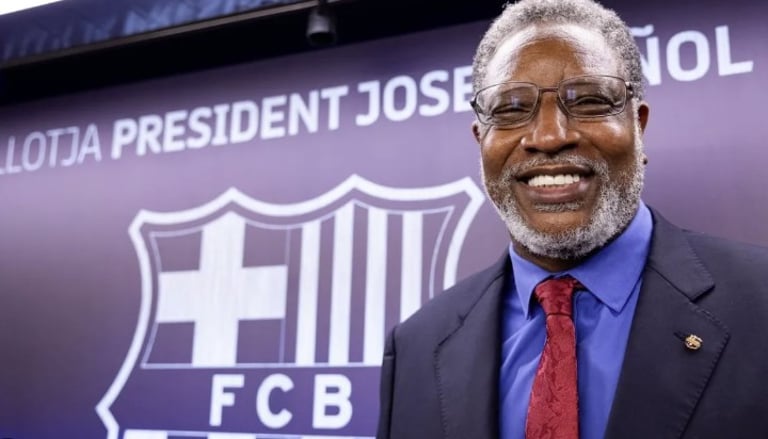
Once upon a time in the West.... back when the Greek domestic league was atop the European domestic championships, Peristeri managed to sign a man born on this day back in 1960: Audie Norris. For those unfamiliar with the true stature of the “Atomic Dog,” let me simply say this — he was one of the finest all-around basketball packages ever to cross the Atlantic and land in Europe. Voted the greatest foreign player in the history of FC Barcelona in 2019, and one of the premier big men in Europe during the 1980s, Norris grew up in a small Mississippi town, dreaming of following the path of his older brother Sylvester and making it to the NBA.
After starring at local Jackson State, Norris declared for the 1982 draft and heard his name announced by Larry O’Brien as the 37th pick of the Portland Trail Blazers. In Portland he played three seasons up to 1985, mostly as Michael Thompson’s backup — the very man who took him under his wing and stuck him with the nickname “Atomic Dog,” inspired by the song Audie played endlessly in the locker room.
But knee injuries, which would haunt him his entire career, combined with Portland’s acquisition of Sam Bowie, pushed him out of the NBA. And so the transatlantic journey became the only path for the imposing American.


His first European stop was in northern Italy with Treviso, then a newly promoted club fighting for survival. Norris immediately stood out in Serie A, averaging 21 points and 11 rebounds over his two seasons there. His game hardened in the unforgiving landscape of Italian basketball, and by the end of his first year he was already on the radar of Europe’s giants. In the summer of 1986, he was a breath away from signing with Real Madrid — but the transfer collapsed over a trivial financial gap of just $10,000. In the years that followed, Audie would make Madrid deeply regret missing the chance to form what could’ve been Europe’s most dominant big-man duo. The next season, Norris was once again one of the market’s hottest names. Aíto García Reneses, searching for Wallace Bryant’s replacement, rushed to secure the American’s signature — he had been tracking Norris since the 1984 Las Vegas Summer League. The agreement struck was unusual, involving three sides: the player, Barcelona, and Virtus Bologna, who also wanted him. Spain and Italy reached a Solomonic compromise: Norris would play for Barcelona for two seasons, then move to Virtus. But the deal collapsed after just one year in Barcelona — Norris’s impact was so immense that the club paid the fee to keep him permanently.
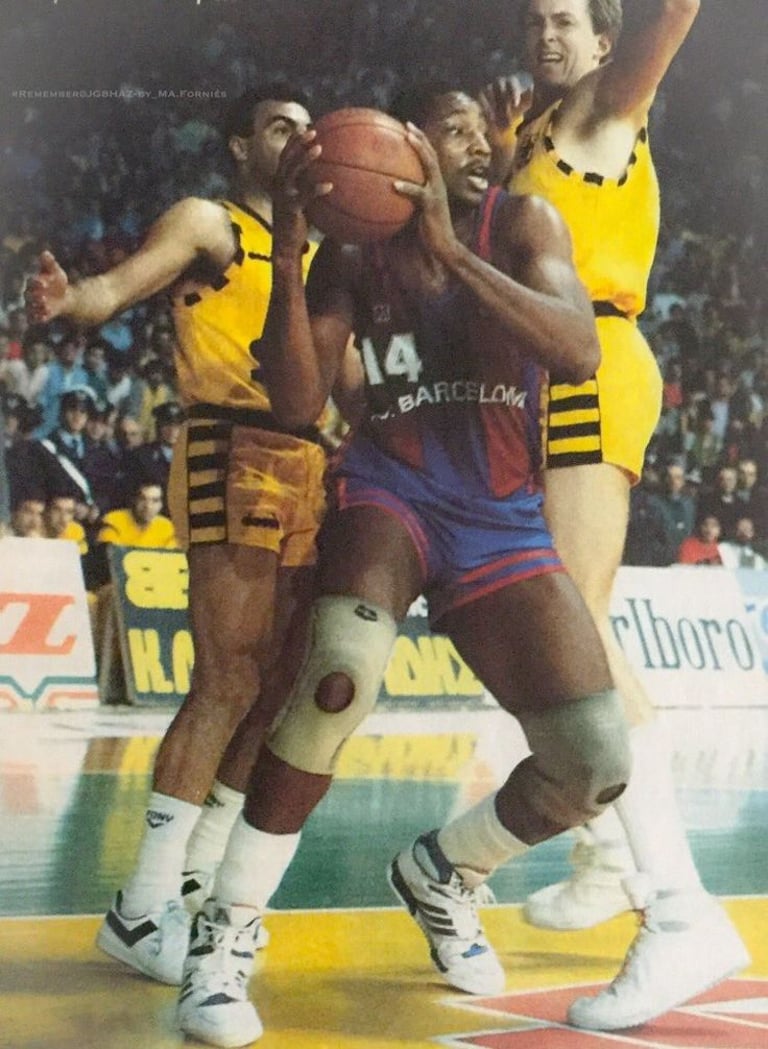
And how could they not? Norris fit perfectly into Barça’s roster, becoming the vital link between its “killer” perimeter and its interior game. Audie cleaned up the boards, allowing the Catalans to ignite their beloved fast break. And when the tempo slowed, the ball went inside to the American, who with strength and flawless footwork in the low post always found a solution. A championship arrived in his very first year in Catalonia, and everyone saw in him one of Europe’s most dominant centers. The next great target was the Champions Cup — a dream that would remain elusive, the Nemesis of Audie Norris. The first attempt ended in disaster as Barça paid dearly for losses to Den Bosch, Saturn Köln, and the “funeral” performed by Aris on December 3, 1987 at Palau Blaugrana. In Galis’ mythical performance, Norris witnessed the “Gangster’s” offensive explosion firsthand. That night he decided to name his youngest son Nikos, in honor of his rival.
Norris and Aris — and Galis — would cross paths many times, both in the Champions Cup groups and at Final Fours, with wins split between them. First in Munich, in the “small final,” and later in Zaragoza, in the swan song of the “Emperor” Aris and Barça’s biggest missed chance at the Holy Grail of European basketball. Norris had a huge game in the final — 18 points, 10 rebounds — but the phenomenal youngsters of Jugoplastika seized the moment. Audie and Barça returned determined in Paris, but the movie “The Cycle of Lost Final Fours” ended the same way again, with the American limited by a shoulder injury. At least he was compensated with titles in Spain, where every night meant brutal battles against Sabonis, McGee, and especially the late Fernando Martín — a rival Norris admits pushed him to his limits and brought out his best. Their relationship was built on mutual respect, and Norris usually came out the winner.
And so we reached 1993. After six decorated years in Barcelona — and after many clashes with Reneses — the 33-year-old Norris sought new scenery. His name began to circulate loudly in Greece, during an era when Greek basketball lived its golden days. Money flowed — from title contenders and from smaller yet financially powerful clubs. One of those clubs was Peristeri, owned by Panagiotis Nikas (of the well-known deli-meat company). Moving with absolute secrecy through agent Gus Politis, Peristeri managed to steal the “Atomic Dog” from all other suitors, signing him to a two-year deal worth $800,000 — a massive transfer that caused shockwaves.
Alongside Lance Berwald in the paint — and despite his weary knees — Norris significantly lifted Peristeri. His class was evident every minute on the court, even if age had begun to show. (Nikos Tsagkopoulos, his teammate that year, once told me that practicing against Audie felt like trying to push a brick wall. And beyond that, he was an impeccable professional, always willing to teach young players his moves.)
Because of his leg issues, he decided to retire at the end of the 1993–94 season, without completing his contract with the “Princes.”
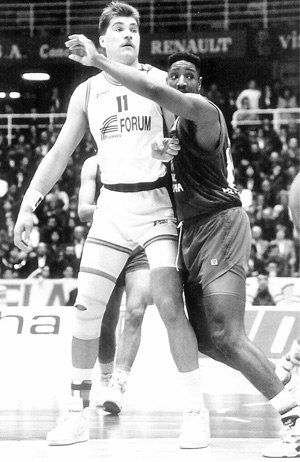
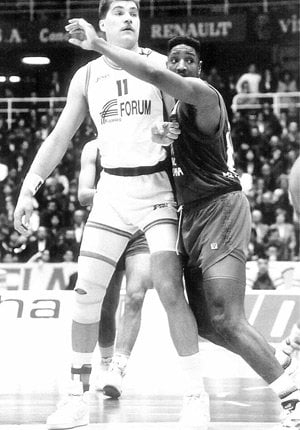
Lucky are those of us who saw him live, even for just one season — for Audie Norris was a true explosive force in the paint: tremendously strong, especially in the upper body, with sheer physical power that compensated for his relatively modest height for a center. An elite rebounder, with polished moves around the basket, skilled and forceful. A complete paint player — and rightfully a member of the elite group of the greatest big men in European basketball.