David Rivers
“The Emperor of Rome”
RETROPLAYERS
Antreas Tsemperlidis
2/12/20267 min read
In 476 AD, the mercenary soldiers of Odoacer entered the “Eternal City” as conquerors, officially bringing down the moribund Western Roman Empire and marking the beginning of the Middle Ages for Europe. The barbarian general would raise his banner in the Forum, where for centuries the "Imperatores" had celebrated triumphs for the glory of the Senate and the people of Rome.
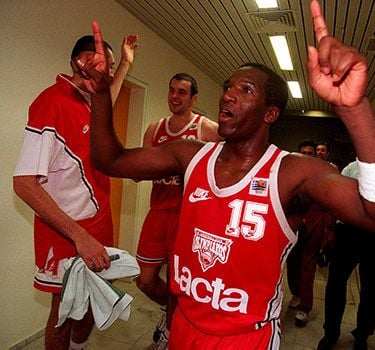
Fifteen hundred years later, not far from the Colosseum, in another arena, the chant “Ave Caesar” would be heard once again from the delirious crowds of Olympiacos supporters, addressed to the man who would be crowned “Emperor.” David Rivers would lead the red-and-white legion onto the battlefield and, paraphrasing Julius Caesar, “he came, he played, he conquered.”
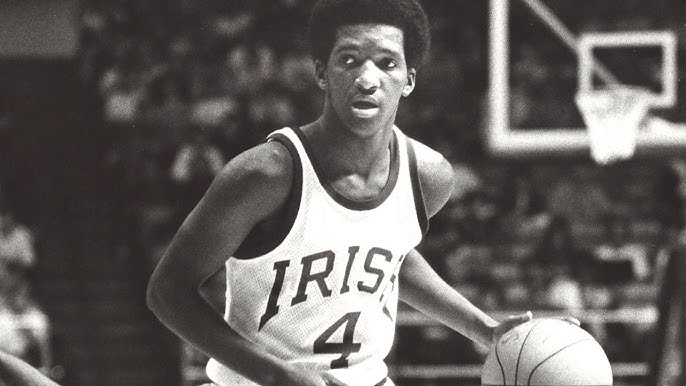
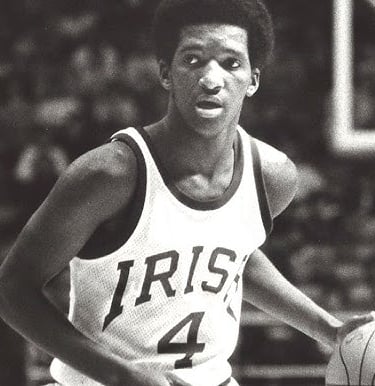
Those who had known Rivers for years were not surprised, because the short American was above all a winner in life—a life that was anything but easy for his family of 17 (!!!) members. His parents, understandably, struggled to make ends meet, while his youth was scarred by the tragic deaths of two of his older brothers. The young man found an outlet in basketball and the outdoor courts of New Jersey. As one of the best high-school players in New York State, he attracted the interest of several college programs, and eventually Notre Dame, under Richard “Digger” Phelps, secured his signature.
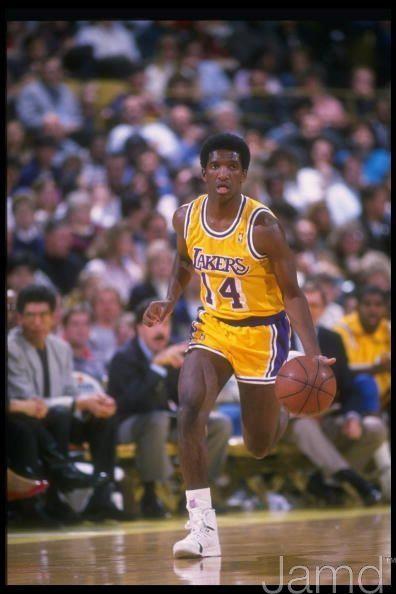
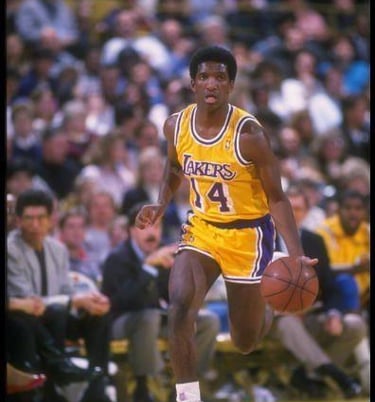
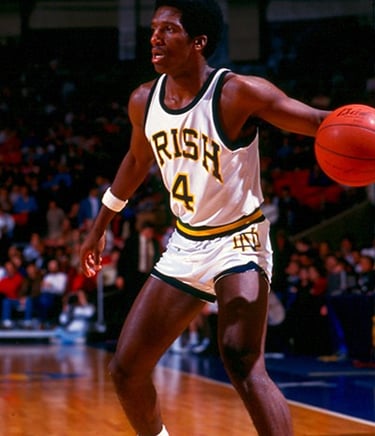
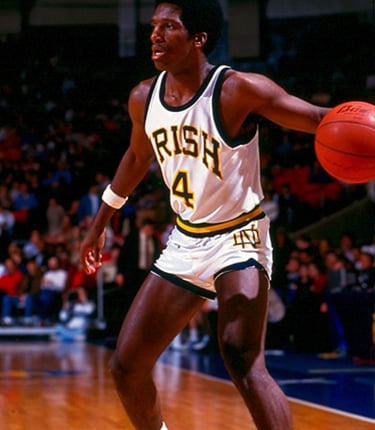
The joy grew even greater when, at the draft, the champion Lakers selected him with the 25th pick. Naturally, there were no great expectations for rookie Rivers beyond giving Magic Johnson some rest. And while Johnson won the second MVP of his career and David accepted his role, he would unexpectedly be thrust into the spotlight.
In Game 2 of the Finals against the Pistons, Magic was injured and ruled out for the remainder of the series. Rivers, the only point guard on the roster, shouldered a massive burden alongside Michael Cooper—and, of course, could not cope. Thomas and Dumars devoured him, and David watched the Bad Boys sweep the champions.
The next phase of his career found him selected by Minnesota in the expansion draft, but he ultimately did not change cities—only neighborhoods. The other Los Angeles team, the Clippers, gave him a roster spot, again as a backup point guard.
Rivers’s brief and unremarkable NBA career ended on January 7, 1992, when he was released by the Clippers. He stayed in the U.S., believing strong performances in the CBA would rekindle the interest of general managers. When that did not happen, he followed the path of so many compatriots and crossed the Atlantic.
Armed with the MVP award of the French Finals, he entered the summer of 1995 as a free agent, seeking a team with higher ambitions than Antibes—while that same summer, Olympiacos, finalists in the European Champions Cup, were looking for a new foreign duo after the departures of Johnson and Volkov.
The first was the familiar Walter Berry, while for the second spot the plan was to sign an experienced playmaker. Throughout the summer, various names circulated—Marčiulionis, Terry Porter, and Scott Skiles standing out. When the eternal rival announced the signing of Dominique Wilkins, everyone awaited Olympiacos’s response.
Giorgos Salonikis fueled the rumors by promising a “river of a player,” leading many to think of NBA veteran Glen “Doc” Rivers. Imagine, then, the disappointment of the Reds’ fans when it became known that the man arriving at the port was David Rivers. It certainly was not the answer they expected to the “Human Highlight Film,” accustomed as they were to leaders like Žarko and huge names like Tarpley and Eddie.
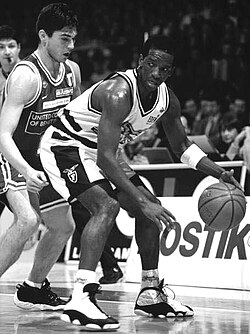
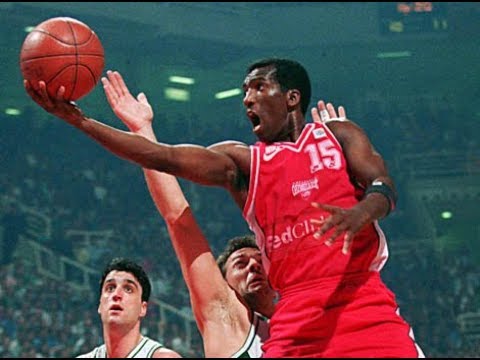
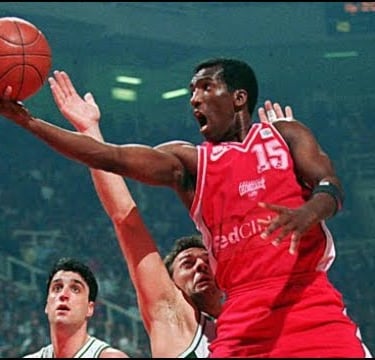
Of course, information trickled in slowly at the time, describing a lightning-fast guard, an excellent ball handler who could score off penetration and strong finishes or with a jump shot, while also being a good defender with a knack for steals. After a colorless debut against PAOK, David presented his credentials against Benetton in the Champions Cup at the intimidating SEF arena. A brilliant performance, capped by a play with three seconds left: pressured, he went coast to coast, finishing with a behind-the-back dribble for the basket.
Olympiacos fans loved him for his spectacular basketball, even if the season did not unfold ideally. Plagued by injuries, the Reds at one point were forced to play with just one foreigner, due also to Berry’s absence after contracting hepatitis B. Elimination by Real Madrid in the quarterfinals, with home-court disadvantage, felt natural, leaving the sole remaining goal the fourth consecutive league title. As in much of the 1990s, the opponent was the crowned European champion, Panathinaikos. The series went to a fifth game, etched forever in Piraeus memory for the thunderous 73–38 and the slap delivered to the Greens.
With the Fighting Irish, Rivers would meet Ken Barlow, two years his senior, and the two would be bound by a powerful personal story. On August 24, 1986, the van driven by the future PAOK player, with David as a passenger, swerved to avoid a vehicle that ran a stop sign and veered onto a dirt road. Ken escaped with minor injuries, but David—who, like his teammate, was not wearing a seat belt—was thrown through the windshield during the rollover and landed severely injured in the abdominal area in a ditch ten meters away.
He hovered between life and death and ultimately survived because his vital organs had not been damaged. After a seven-hour surgery, doctors stabilized him, and the prayers of his coach—who begged God not to let his player become a client of his father (a gravedigger, hence Phelps’s nickname “Digger”)—seemed to be answered.
Fifteen days in intensive care and a deep 40-centimeter scar would forever remind Rivers of the day he stood on the banks of the Acheron but did not cross. After rehabilitation, he returned to the court and, by his graduation in 1988, became the college’s all-time leading scorer.
Truth be told, Rivers did not manage to carry the team as he had in Antibes, and Ioannidis could not bring out his best qualities either. Opinions about the American were sharply divided, and his release seemed almost certain if “the Blond” stayed on. But Ioannidis’s famed psyche had broken, and immediately after winning the title, in an emotionally charged press conference, he announced his departure from Olympiacos.
Kokkalis moved quickly, hiring Dušan Ivković and handing him the keys. The Serbian coach, too, did not view Rivers as his first choice. He desperately wanted Byron Dinkins, with whom he had worked perfectly the previous year at Panionios. When “the Lord” slipped through Panathinaikos’s fingers, the next option was Saša Đorđević, but that card also burned due to Virtus Bologna’s high demands. Inevitably, Olympiacos was “left with” Rivers, who felt he did not enjoy his coach’s full trust. Things started very difficult for the champions. Players struggled to adapt to Ivković’s demands, and until the team clicked, defeats—especially in Europe—came one after another. Domestically, they even lost to near-relegated VAO. That match marked rock bottom—and the moment when Duda made the pivotal decision that changed everything.
Observing Rivers’s chaotic style, he placed Milan Tomić next to him in the starting five, instructing him to rein in the enthusiastic American. Freed from playmaking duties, David took on the role of scorer and excelled, vindicating Ivković and those who claimed he was a shooting guard trapped in a point guard’s body. He once again covered, with complete success, the absence of a second foreigner: Willie Anderson never meshed with Ivković and was quickly sidelined, while Evrik Gray was caught doping and also departed summarily.
The quarterfinal matchup for a place in the Rome Final Four once again pitted the Reds against Maljković’s Panathinaikos. Led by Rivers, who decisively won his battles with Dinkins, Olympiacos took the series 2–0 and punched their ticket to the Eternal City.
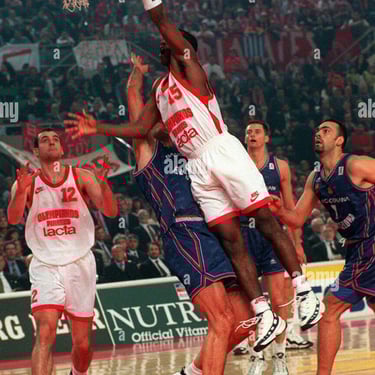
A semifinal against Slovenia’s Olimpija brought the first “shot fired” by David: 28 points and qualification for the grand final on April 24, 1997, at the PalEur arena, where Barcelona awaited—led by summer rival Aleksandar Đorđević.
I don’t know whether the American did any special mental preparation for that game, but he “erased” the Serbian superstar defensively and offensively exposed every defensive scheme of Aíto García Reneses. The new “Emperor” of Rome was named David Rivers, and like his predecessors he was exalted in his own triumph.
As European champions, Rivers and Olympiacos defended their domestic crown against the resurgent AEK of Giannis Ioannidis. David rose to the occasion once more, and the Reds achieved a historic treble.
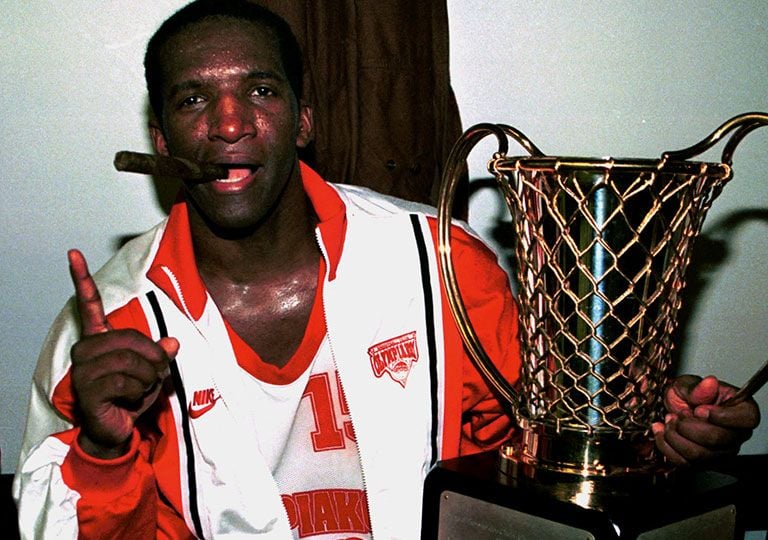
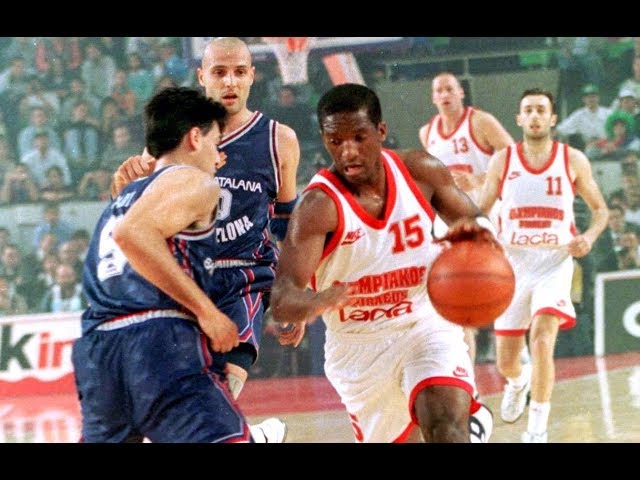
Rivers had completed his first spell at Olympiacos having won everything—and he himself was decisive. Everyone expected high demands for his renewal, but the landing was brutally hard when his agent stated he would discuss nothing less than a guaranteed three-year deal worth $2.5 million. Olympiacos weighed the pros and cons and chose not to offer the 32-year-old the contract he sought.
Italy opened its arms, and Rivers moved to Bologna, wearing Fortitudo’s blue alongside Dominique. One cup was his haul in the single season there, after which his career returned to the Eastern Mediterranean and the Turkish league. With Tofaş Bursa, he returned to championship glory with two straight titles, stamping his mark on Game 5 of the 2000 finals by scoring 40 points against Efes.
Perhaps that is why Ilias Zouros approved his return the following summer after the Rigondeau deal collapsed, believing the American still had something to give—but unfortunately he was proven wrong. The years had passed; Rivers’s legs had grown heavy, his explosiveness greatly diminished, and defenders now guarded him far more easily. To compound matters, there were incidents of indiscipline toward his coach, just a year younger than him. His final game in an Olympiacos jersey—and of his career—was Game 5 of the championship finals, which ended in defeat. After that match, Rivers retired from active play. Greece and Olympiacos certainly hold a special place in his heart. Here he won the greatest trophy and wore the crown.
Reds supporters adored him, and many consider him the greatest foreign player in the club’s history. What is certain is that David Rivers found the right team to showcase his rich talent and inscribe his name in golden letters in the book of Olympiacos’s great moments.
He will forever be the “Emperor” of Rome—the man thanks to whom the people of Piraeus entered the lLibro d’Orol of European basketball. Ave David Caesar, qui te victam salutant…