Drazen Petrovic
"The son of the Devil was Mozart"
RETROPLAYERS
Antreas Tsemperlidis
6/17/20258 min read
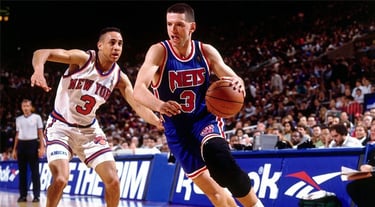
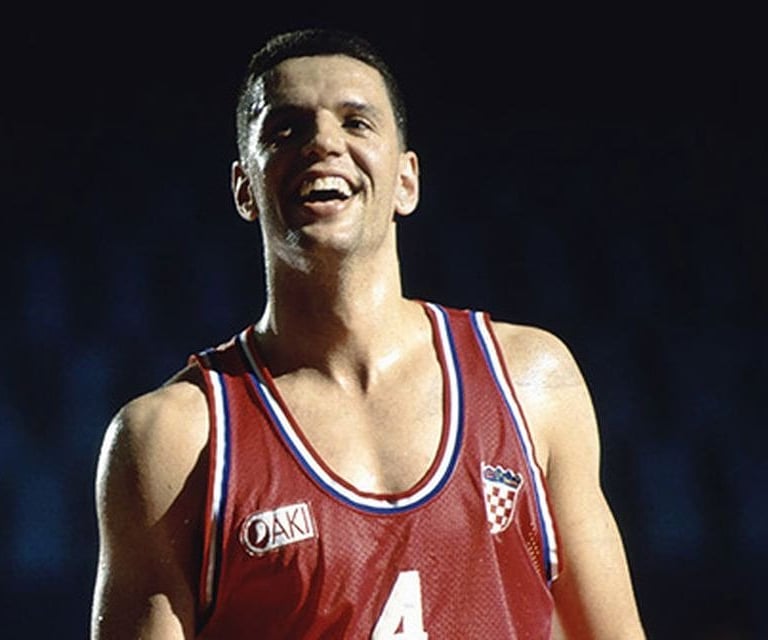
On July 9, 2001, in Split, 150,000 Croatians gathered in the central square to celebrate tennis player Goran Ivanišević, who had just won the Wimbledon tournament. Suddenly, the crowd erupted in a frenzy. What had just happened? In an unexpected move, Ivanišević, wanting to pay tribute, took off his shirt, revealing the familiar sky-blue jersey of the New Jersey Nets with the number 3 on the back. It was the jersey of the greatest sports hero in the history of this small country, no other than the unforgettable Dražen Petrović. And when the son of Serbian Jovan and Croatian Biserka was sacrificed to the Moloch of the asphalt, all of Croatia mourned him as one of its own.
As these lines are being written about the "Mozart" of basketball, I wondered whether I could truly capture the brilliance of his basketball genius and the legacy he left behind when his life was so unjustly cut short.
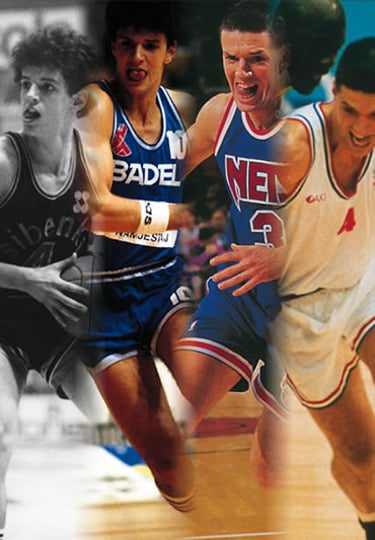
That life began in the small town of Šibenik, where Dražen was born on October 22, 1964. At the age of five, he received as a gift from his brother Aleksandar the orange ball that would become the greatest love of his life and to which he remained faithful until the end. Joining the local team, Šibenka, seemed like the only path, just like the stories of the young boy with the afro who had the keys to the gym and showed up at 6 AM every day to take 500 shots in the dark. Balancing between truth and legend, this type of reputation followed Drazen around.
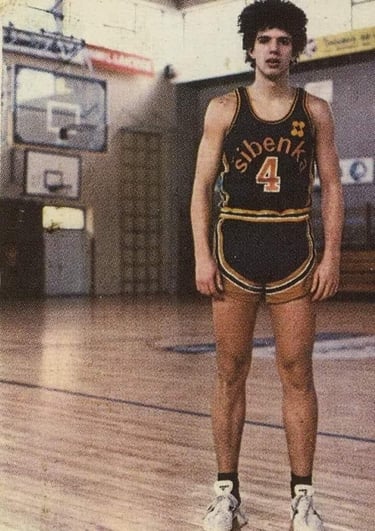
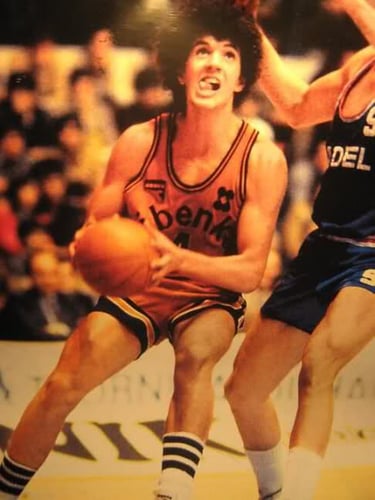
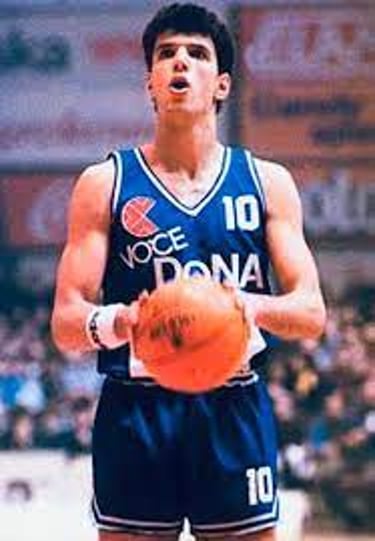
At just 15, he joined Šibenka’s senior team, which had just been promoted to Yugoslavia’s top league. Within four years, all of Yugoslavia and Europe knew about this kid who led his team to its greatest moments, capped by two consecutive Korać Cup finals (1982, 1983), where Limoges proved an insurmountable obstacle. But domestically, Šibenka, led by Petrović, pulled off a major upset in 1983 and won the title. Or so it seemed... In the final game against Bosna Sarajevo, Dražen hit two free throws at the buzzer to win the championship. However, the celebrations were short-lived. The next day, the Yugoslav Basketball Federation (KSJ), in a controversial decision, ordered the game to be replayed on neutral ground in Novi Sad, citing serious refereeing errors. Šibenka refused, and the title was awarded to Bosna. The season ended without a trophy at either club or national level, as Yugoslavia finished only seventh at the EuroBasket in France. Dražen stayed with Šibenka the following year and after winning the bronze medal with Yugoslavia at the 1984 Los Angeles Olympics, he followed in Aleksandar's footsteps and joined Cibona.
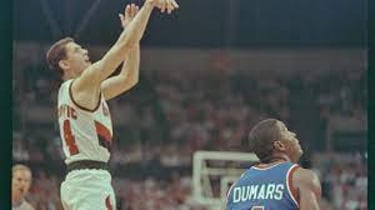
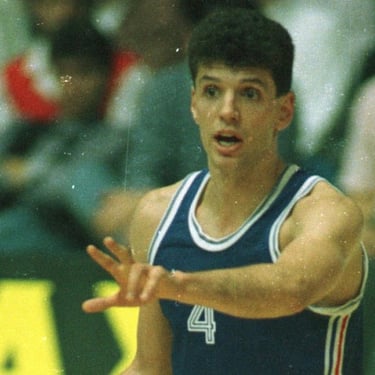
In Zagreb, his game matured and he offered several moments of pure magic. His scoring records remain unbroken, highlighted by the October 5, 1985, game against Olimpija Ljubljana, in which "Mozart" scored an astonishing 112(!!!) points with incredible efficiency. That same season, he ruthlessly scored 56 points against his old team Šibenka and openly admitted he’d do it again without hesitation. Cibona’s golden 1985–86 era, with two consecutive European Champions Cups, marked Dražen’s launch into the elite of European basketball. The Portland Trail Blazers had scouted him multiple times and selected him as the 60th pick in the infamous 1986 draft. That summer, at the World Championship in Spain, he was the top player for coach Krešimir Ćosić’s team, but they were again limited to a bronze medal after a semifinal stumble in Madrid. The 1986–87 season began with Dražen determined to prove he was the best European basketball player. Ironically, he and Cibona were stunned in the league semifinals by Red Star Belgrade, led by Bane Prelević and coached by Vlado Đurović, a familiar face from Šibenka. Still, he was compensated with another European title -the Cup Winners' Cup- and arrived in Greece for the EuroBasket ready to claim gold. But there, a short Greek guard who lit up the court every night beat him twice, sending him home again with bronze. His return to Yugoslavia for a final season with Cibona did not end successfully, due to the rise of Jugoplastika. But one thing had become crystal clear, Yugoslavia had become too small for Dražen Petrović.
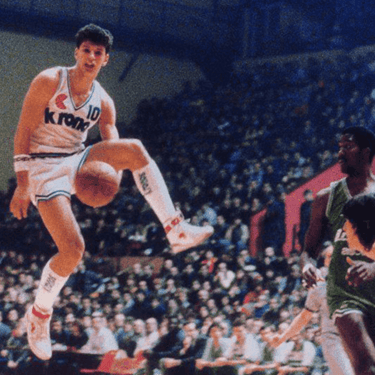
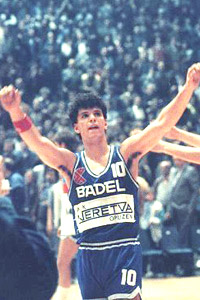
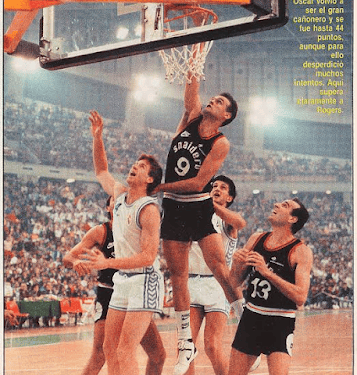
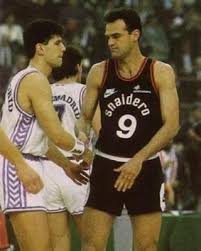
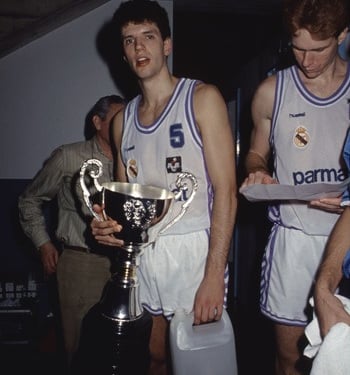
The "Queen" of Europe (Real Madrid) fervently desires his transfer, but a major obstacle stands in the way: the Yugoslav Federation does not allow its national players to go abroad unless they are at least 28 years old. And Petrović is only 24. Eventually, with the right “behaviour toward the right people (rumours spoke of two million dollars), permission is granted to "Mozart," who, right after the Seoul Olympics, becomes the king of Madrid with a corresponding hefty contract for his services. Wearing the Real Madrid jersey, on March 14, 1989 in the European Cup final against Caserta, he delivers one of the greatest performances we’ve ever seen. On the court of Peace and Friendship Stadium in Pireus, in an unforgettable final whose spectators should feel privileged by fate, two of the fastest guns in world basketball Petrović and the "Pelé of basketball," Oscar Schmidt kept firing nonstop in an epic duel.
The result? A staggering 62 points for "Petro," 44 for Oscar, an insane final score of 117–113 and the title ending up going to Madrid.
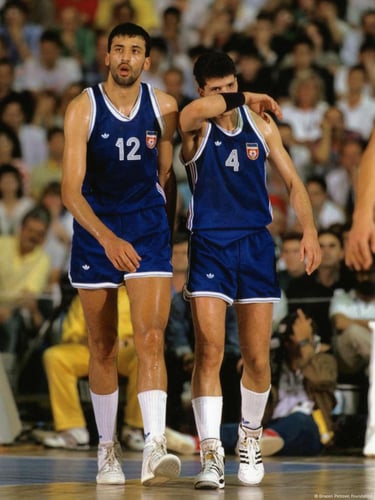
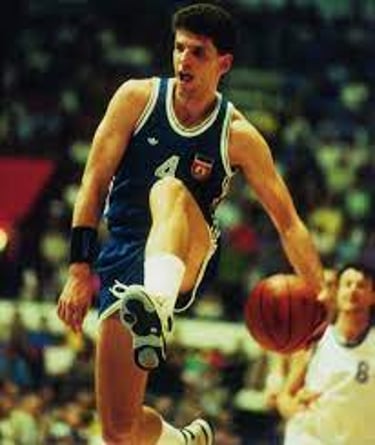
That might have been the game where Dražen realized he had nothing left to prove in Europe and that the time to make the leap to the NBA had come. But first came national duty and the upcoming EuroBasket, which would be hosted in Yugoslavia. As the leader of the greatest European team of all time, he would play the best basketball of his career in that tournament. Every night was a true performance, with "Mozart" flawlessly orchestrating the symphony of Ivković's young squad. This time, the bold Greek nicknamed "Gangster" (Nikos Galis) would not manage to defeat him, and the gold medal would shine on Dražen’s chest. On the winners’ podium, the two -who deeply respected each other- spoke about how wonderful it would be to someday play on the same team. Surely, at that moment, the gods of basketball smiled...
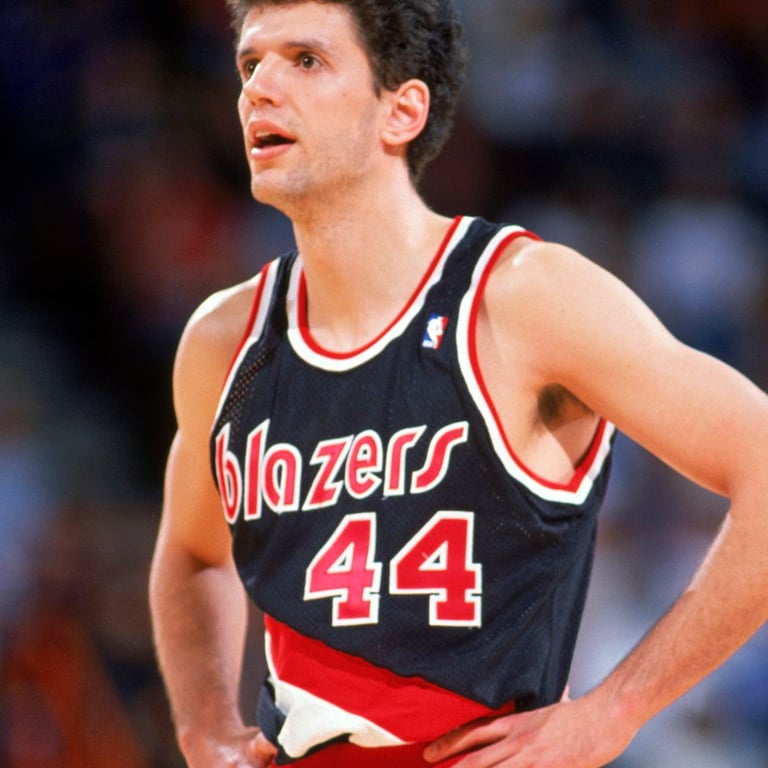
But the time had come for the leap to planet NBA. The Trail Blazers would buy out the remainder of his contract with Real, and Dražen would travel to Portland to join the team. Things, however, would not turn out as he expected. Rick Adelman made it clear in every way that he didn’t count on him, relying entirely on the two All-Star guards, Terry Porter and Clyde Drexler. The American scouting reports mistakenly described him as a static shooter coming off screens, without the ability to create his own shot. The coach didn’t trust him and never gave him enough playing time to find his rhythm. The Blazers were a championship-contending team, and their coach wasn’t willing to invest more time in the young Yugoslav that had been "forced" upon him. Dražen, used to being the protagonist in Europe, believed Adelman didn’t respect him. They never managed to find common ground throughout the season. Once again, his only consolation was the national team and the gold medal at the FIBA World Championship in Argentina. He returned to Portland hoping for a bigger role, but unfortunately, his minutes were reduced even further with the worst was yet to come. The arrival of Danny Ainge pushed him completely to the end of the bench. Disappointed, he started seriously considering a return to Europe.
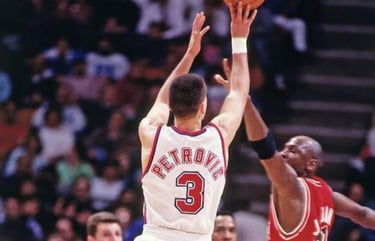
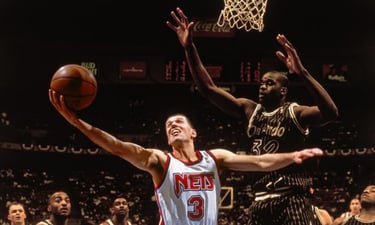
At that point, the Nets came calling. Through a three-team trade, he landed in New Jersey. Under coach Bill Fitch initially and later the legendary Chuck Daly, he began to resemble the player who had once dazzled all of Europe. The following season, he would truly shine. Averaging 20.6 points with a 51% field goal percentage, he was the top-performing guard in the league. Together with Derrick Coleman and Kenny Anderson, he led the Nets to the playoffs for the first time in seven years, playing a pivotal role in the team’s resurgence. Everyone in the NBA now recognized his value and they waited eagerly to see if he could do it again. Dražen knew this and he was preparing himself both physically and mentally. But first, he had to face a new challenge.
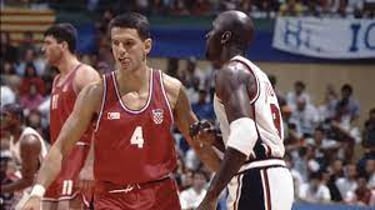
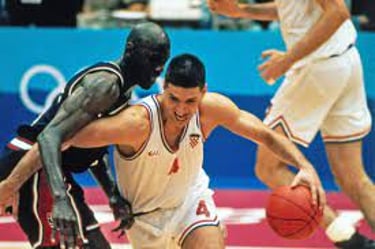
The country where he was born and achieved greatness –Yugoslavia- no longer existed. His new homeland, Croatia, called upon him, and Dražen would take his team by the hand and lead her to the Olympic final in Barcelona, against the "aliens" of the Dream Team. There, once more, he would prove he belonged among the best.
He confirmed he belonged to the world’s elite in the 1992–93 season -his best in the NBA-finishing as a member of the All-NBA Third Team, behind only Michael Jordan and Joe Dumars, ahead of players like Reggie Miller, former teammate Clyde Drexler, and Mitch Richmond. Still controversially, he wasn’t selected for the All-Star Game and justifiably declined the three-point contest invitation. At age 29, he had conquered the NBA through talent and sheer determination. Yet the Nets hesitated to offer him a new contract, and Dražen didn’t hide his frustration.
He traveled to Europe to play for Croatia in the EuroBasket 1993 qualifiers in Wrocław, Poland. There, he allegedly received an offer from Pavlos Giannakopoulos: a three-year, $9 million contract to play for Panathinaikos. "Mozart" was reposrtedly excited about the prospect of teaming up with Galis and Vranković and promised the Panathinaikos president an answer after the qualifiers. My personal belief? He had already decided to sign with the Greens. And if that had happened, we would just be looking for who’d come second. I can’t even imagine what we would have seen with "The Gangster" and Dražen on the same court....
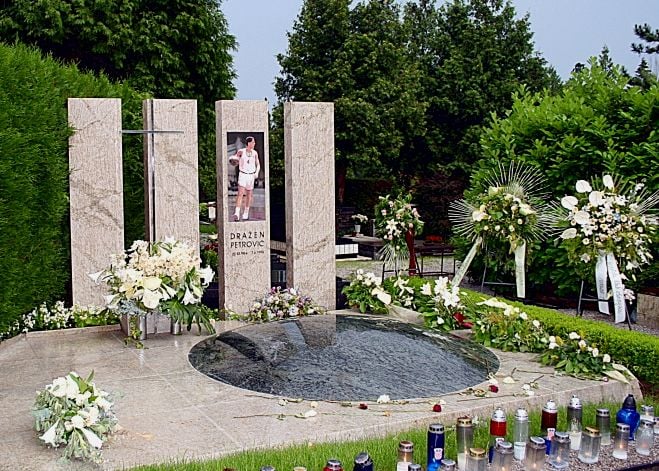
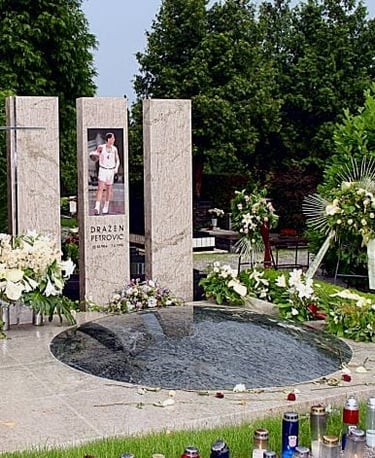
But let’s go back to Wrocław. In his final game on June 6, 1993, against Slovenia and his former teammate Jure Zdovc, the scoresheet would list 30 points next to Petrović’s name. None of those present knew they were witnessing history. It was Mozart’s Requiem—the last appearance of a legend. A few hours later, the Croatian team flew to Frankfurt to connect to Zagreb. Dražen, who never liked airplanes, asked Mirko Novosel for permission to travel by car to Munich, where his Hungarian girlfriend, Klara Szalantzy, was waiting. Turkish basketball player Hilal Edebal also joined them in the car. As if fate conspired against him, Dražen realized that day his driver's license had expired. He chose to sit in the front passenger seat and, exhausted, quickly fell asleep. At the same time, Dino Rađa looked out the airplane window at the suddenly clouded skies over Zagreb. He had a bad feeling and checked his watch. It was just after 5 p.m., and the red Volkswagen Golf was driving along the wet surface of the A9 autobahn from Munich to Nuremberg. On the opposite lane, a truck driver swerved sharply to avoid a stopped car. Due to the slippery road, he broke through the divider, crossed into oncoming traffic, and came to a stop. Szalantzy had no time to react. The Golf collided with the heavy truck. Dražen, who wasn’t wearing a seatbelt, was thrown through the windshield and died instantly. The date was June 7, 1993, at 5:20 p.m., when the "Son of the Devil" departed for the neighbourhood of angels. Hours passed until a German police officer managed to identify the man in the black sneakers. The family and Croatian Basketball Federation were immediately notified. The basketball world was stunned. His funeral in Zagreb became a national mourning, and his gravesite at Mirogoj cemetery continues to attract thousands who leave flowers and bow before the greatness of "Mozart."
Dražen left too soon and maybe that’s why he rushed to do everything so fast, as if he somehow knew his time was limited. He was egotistical, rebellious, and provocative on the court -but tell me one great player who wasn’t at least one of those things. He was the best, and he knew it. That’s why he never feared anyone. Not even that Jordan, who once admitted:
“We had some great battles in the past. I liked playing against him because he never backed down—and he always looked me straight in the eye.”
That was Dražen. The unstoppable hero with rare talent. The ball was his baton, and he always wanted it in his hands to conduct his orchestra - composing unforgettable melodies in his mind, until the orchestra fell silent that fateful afternoon in Germany...