Henry Turner
“Forgetting to land”
RETROPLAYERS
Antreas Tsemperlidis
1/18/20267 min read
The 1992–93 season that had just concluded was undoubtedly the most dramatic in the long history of Panionios. The Nea Smyrni club was still trying to recover from the unprecedented tragedy of Boban Janković, while the upgraded Kostas Missas took on the difficult task of replacing the highly successful Žurović. The management of the “Historic Club” put all the necessary resources at the coach’s disposal and significantly strengthened the team. Especially at the end of August, with the signing of Giannakis, who had been released from Aris following a legal dispute. The captain of the Greek National Team, after nine years in Thessaloniki, returned to his hometown, and the fans were celebrating at the thought of a duo with Fanis. First, however, two new foreign players had to be found to replace Boban and P.J. Brown. The executives’ “radars” were sweeping the American market, and proposals were arriving one after another at the offices of the Artakis indoor arena.
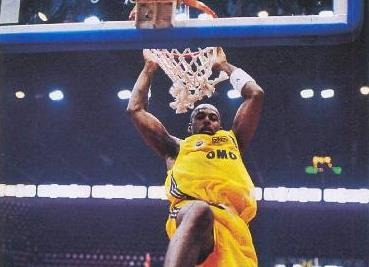
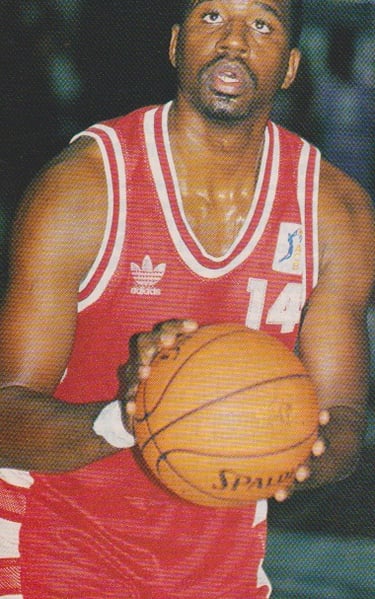
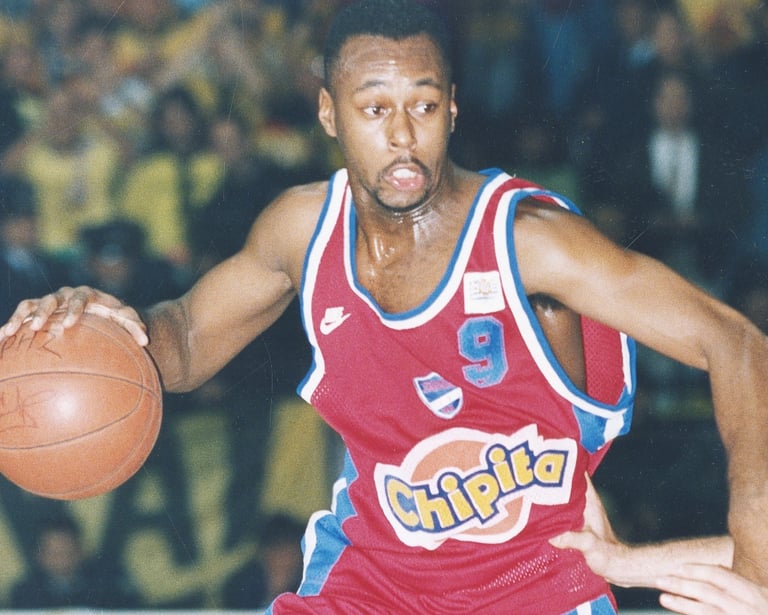
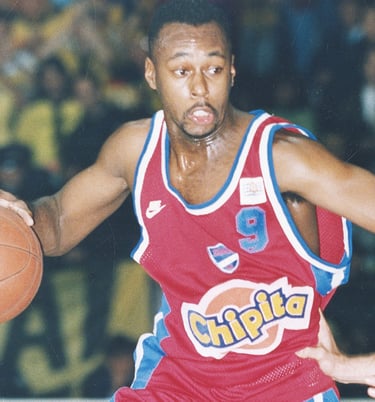
The one that immediately stood out was the case of an American guard-forward playing in Italy’s Serie A2 with Firenze. The name of the 27-year-old choice? Henry Turner, the beloved “Flash” of all Greek basketball fans. Perhaps the greatest showman—without excluding Dominique—that we ever enjoyed on Greek courts.
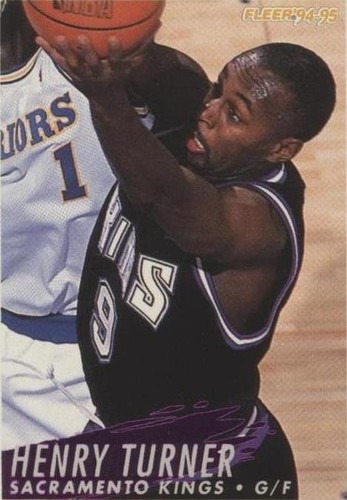
Like all his compatriots who play the orange ball, Turner dreamed of making it to the NBA. However, his college career was not one that justified being drafted. At an obscure college like Cal State Fullerton, Henry did stand out, but the team was weak in an equally weak conference, the Pacific Coast. He completed his four-year tenure with the Titans with 1,329 points, and although he declared for the 1988 NBA Draft, he watched disappointed as NBA teams passed over his name without interest. The second-tier professional league in the U.S., the CBA, was Flash’s only option in his attempt to attract the attention of the world’s best league. Through his performances with the Rochester Flyers, the Sacramento Kings invited him to the 1989 Summer League, and on September 10 he signed a one-year contract worth $150,000. At last, his dream had come true, and on October 11 he made his NBA debut alongside Danny Ainge. Just 36 games made up his first short-lived season with the Kings, with limited playing time. His release and placement on the free-agent list came as no surprise to general managers. One of them, Pete Babcock of Atlanta, offered him a ten-day contract during the first week of October 1990. His presence was limited to practices—and who knows, maybe an informal dunk contest with the Human Highlight Film—and so on October 16 Turner found himself completely out of the NBA.
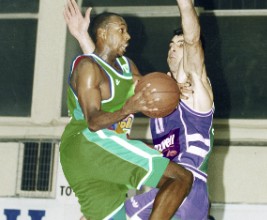
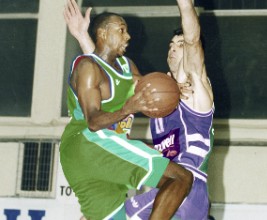
A move to the Old Continent followed, and the baskets of northern Italy, at Udine’s Palasport Primo Carnera, were the first in Europe to witness Hank’s leaping ability. With 29 points and 8 rebounds per game, he was the driving force behind his team’s promotion, earning himself a new contract in Spain with Atlético Villalba as a replacement for Walter Berry. In the ACB, he continued to score consistently around 30 points per game, but with only 8 wins in 34 games, the team had to play in the relegation playoffs, eventually managing to stay up. One of those wins, however, made history. Against Barcelona, featuring Ortiz, Savić, and Epi, Turner scored 52! points, handing Barça a defeat that cost them home-court advantage in the playoffs.
The next chapter of his career, as mentioned, found him in Florence, and from there, in the summer of 1993, he entered tough negotiations with Panionios. Henry would not go below $200,000 for a one-year contract, while Panionios would not go above $170,000. Spanish side Elosúa León entered the race with an offer that satisfied the player, as did the Miami Heat with a strange proposal: one month of practices, and if they liked him, a guaranteed contract in October. For that training period, he would earn $40,000. In the end, the Ventouris administration—under pressure from Missas, who really wanted the player—made the leap, gave Turner the money he demanded, and the American flew to Serbia and Kopaonik for the main stage of preparation. Along with him were two American big men Missas wanted to evaluate during preseason. One was Brent Scott—who, after being cut by Panionios, signed with Larissa—and the other, who earned the spot as the second foreigner, college player Ed Stokes. Everyone was waiting to see if Turner was worth the money. Flash made sure, starting from the friendlies, to showcase both his offensive and defensive abilities. When the official games began, the American delivered a real show in every match.
The Nea Smyrni arena, as well as every court where Panionios played, was packed with fans eager to see the incredible dunks of “Air Turner.” Panionios arguably had the best team in its history and was even considered a championship contender. Those who doubted them were silenced on October 17, 1993, in the legendary game against Galis’s Panathinaikos.
Henry gave us three unforgettable moments in that match.
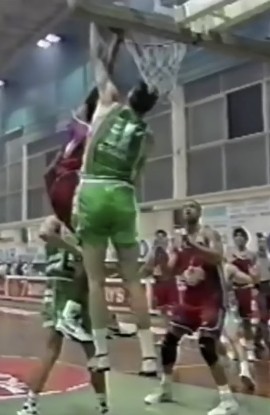
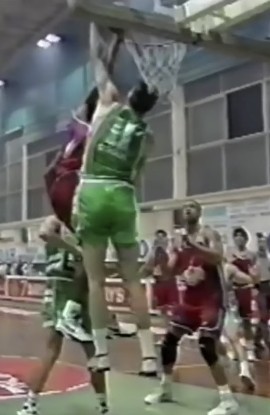
First, an incredible dunk over Europe’s best shot-blocker, the “scarecrow” Stojan Vranković. The Dalmatian giant went up for the block, got a hand on the ball, but Turner’s explosiveness and power literally shoved him into the basket.
The other two were blocks on the “Gangster” himself. Honestly, how many can boast that they stopped Nikos Galis? Flash did it twice in the same game. The first came early, but the second was more spectacular and decisive.
Five minutes before the end, Panionios led 63–55 but stalled against Željko Pavličević’s 3–2 zone. The score was 66–65, Fanis missed the one-and-one, and after a scramble the ball ended up in Koufós’s hands. The blond Estonian lifted his head and saw Galis alone under Panionios’s basket. He passed to Nik, who went—rather casually, to be honest—for what everyone thought would be an easy game-winning layup. Everyone except Turner, who had followed Galis, took his steps, soared, and pinned the ball to the backboard, leaving everyone who witnessed it stunned.
Turner also provided magical moments in Europe, as Panionios competed in the Korac Cup. After cruising through the group stage, they faced the “People’s Team,” Maccabi, in the quarterfinals. In Athens, Panionios delivered an incredible performance and won by 20 points. But as many European teams—Greek ones included—learned the hard way, Maccabi was a different team in Israel. “Hell on Earth,” Yad Eliyahu, was an arena only Aris had managed to conquer until then. Panionios did it too, led by Turner (25 points), Fanis, and Giannakis.
Next came PAOK and the first “civil war” in Greek basketball history. The first half of the Nea Smyrni semifinal was one of the greatest solo performances ever witnessed. Hank drove the crowd crazy with an otherworldly display. His 30 points came in every possible way, including, of course, his beloved dunks. On one fast break, he stunned everyone by spinning 360° mid-air, turning the Artakis arena into the Great Western Forum and evoking Showtime memories. In the second half, a tired Henry couldn’t maintain the same furious pace, and Panionios lost 83–85, a margin they couldn’t overturn in the return leg at Alexandrio, bringing their journey to an end. The season ended without a title for Panionios but is remembered by the “Panthers” as one of the most dreamlike ever. Naturally, everyone wanted Flash to stay, but they respected his wish to return to the NBA.
His former team, the Kings, who had followed his progress all year, rushed to give him another roster spot. Unsuccessfully, as his second attempt ended the same way. Limited minutes in 30 games. Henry accepted that he had no future in his homeland and crossed the Atlantic again—this time for the generous dollars offered by Turkey’s Fenerbahçe. In Istanbul, he was adored by the fans, and he himself enjoyed his time there so much that he even obtained a Turkish passport under the name Hakki Uzun. After three years in Turkey, he played in Italy for Siena, and in 1999 we saw him again in Greece with Maroussi. The years had passed, the springs in his legs had loosened, but Turner found a way to beat Panathinaikos again at OAKA, sinking a free throw at the buzzer—and AEK as well, this time with a three-pointer. Hank’s final stamps came in Italy, with historic Olimpia Milano writing the epilogue of his career.
A career full of dunks and spectacular plays, the result of his incredible athletic gifts. Many players passed through Greece for whom dunking was part of their game, giving us magical moments. But personally, I don’t remember anyone else who made me try—on a 2.70-meter rim, because I couldn’t reach 3.05 back then—to imitate a 360° dunk.
And to wonder how right Panionios vice president Isidoros Kouvelos was when, ecstatic by what Turner did in Kopaonik, he called Ventouris and said:
“Gerasimos, I saw a thing take off and then forget to land…”