
Ratko Radovanović
"A kid that counted stars”
RETROPLAYERS
Antreas Tsemperlidis
10/24/20253 min read
It was in 1972 when the sporting director of Bosna, Vule Vukalović, informed Bogdan Tanjević that in Nikšić, Montenegro, playing for the local team, there was a young player, two meters and eight centimeters tall, whose case was worth checking out.
“I won’t lie to you,” said Vukalović to Tanjević. “He’s only been playing basketball for two years and he’s very skinny. But he’s young—just 16—and already 2.08 tall.” That’s how he tried to convince Tanjević that Ratko Radovanović, born on this very day in 1956, deserved a chance.
Indeed, Tanjević went to Montenegro, saw the tall, lanky kid in person, and after meeting his parents, persuaded them to let their son return with him to his hometown in Bosnia to join Bosna, which had just been promoted to the first division.
For an entire year, Tanjević worked with Radovanović in individual training sessions, increasing his muscle mass and improving his technique. In the 1973–74 season, at the age of 17, he threw him into the deep end in a game against Partizan. His talent, positioning, and defensive skills were undeniable, and he gradually began to earn more and more playing time—becoming the starting center by age 19.
With the Delibašić–Varajić duo maturing and scoring relentlessly, Radovanović became the missing link in Bosna’s chain. Once integrated, he formed the third pillar of Tanjević’s structure. The Sarajevo team kept rising, but the time for titles had not yet come. “Raša” first experienced the sweet intoxication of victory through the national team, of which he had been a member since 1975. Coach Nikolić selected him for the EuroBasket squad held in Belgium in 1977—and was proven right when Ratko performed superbly in guarding Tkachenko in the game that decided the gold medal.
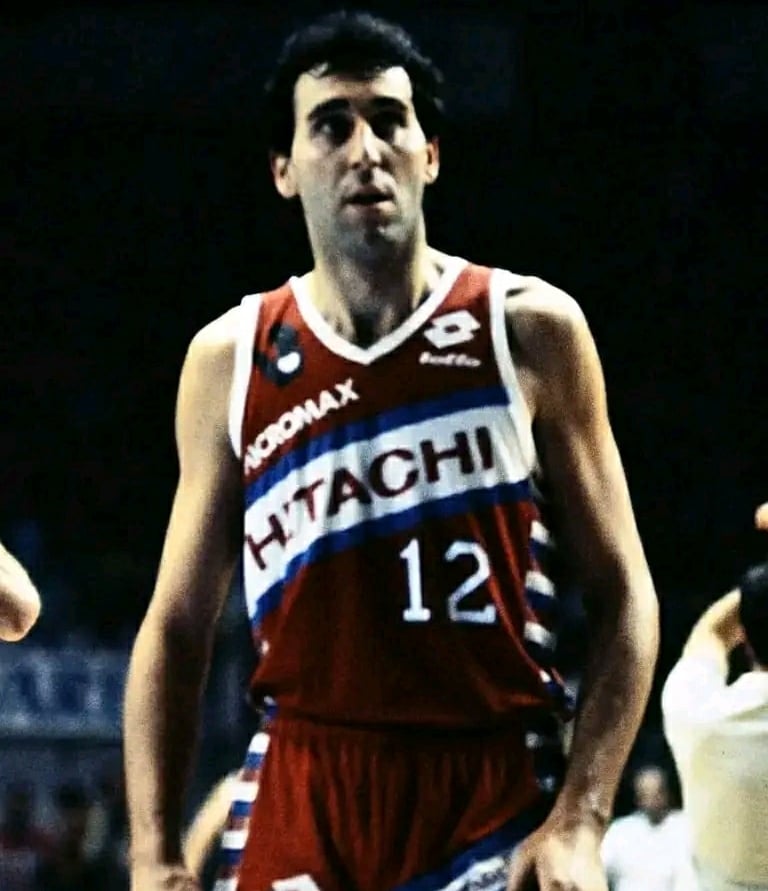
With the honors of a European champion, Radovanović returned to Sarajevo to help Bosna in the tough domestic championship marathon. The season ended with the Bosnians finishing first, bringing the title to Skenderija and earning the right to compete in the 1978–79 European Champions Cup. But before that, Ratko’s focus was on the World Championship in the Philippines, where the Soviets sought revenge for the lost final in Belgium. Radovanović and Tkachenko met again—with the Yugoslav once more emerging victorious, adding the World Champion crown to his European title.At 22, Radovanović was one of the best centers in Europe and a crucial weapon in Tanjević’s arsenal for Bosna’s first-ever participation in the top continental competition. The Yugoslav champions weren’t favorites to reach the final, but Tanjević’s players proved to be tough opponents, eliminating teams like Real Madrid and Maccabi on their way to Grenoble. There, they faced the dominant European team of the 1970s—Varese, led by Meneghin and Morse, appearing in its tenth consecutive final.
The game went down in history for Bosna’s victory—becoming the first Yugoslav team ever to win the Champions Cup—for Varajić’s 45 points and Delibašić’s 30, but the true hero was their center, the man wearing number 9. Just one day before the final, Radovanović had developed a high fever, and his participation was uncertain. Without Ratko, Tanjević knew that Varese, with Meneghin, would dominate the paint (the Italians had kept secret that “Super Dino” was injured and could only play in the second half). Imagine his relief when his player not only showed up for the tip-off but also contributed 10 points and battled fiercely with Dino under both baskets.
The warrior “Raša” never abandoned his teammates, and together they brought the precious trophy back to Sarajevo, where they were received as heroes. That adoration was repeated the following year—this time on the national stage—when the “Plavi” (Yugoslav national team) won the gold medal at the 1980 Moscow Olympic Games.
In 1983, after winning his third Yugoslav championship with Bosna, he decided it was time to earn some money from basketball. After the European Championship, he stayed in France and joined Stade de France. His performance in the French league was excellent, averaging around 20 points and 7 rebounds over three seasons. In 1986, he moved north to Italy to play for Venezia, teaming up with Dražen Dalipagić until his retirement in 1990. During his years abroad, he continued to be called up to the national team, serving as captain in his final tournament—the 1987 EuroBasket—where Yugoslavia finished third.
After retiring, he returned to Bosnia to invest some of his earnings in businesses, but the war stopped everything. The presence of a Serb in war-torn Sarajevo, even if he was a local hero like Radovanović, was not tolerated. So the boy who had arrived in the Bosnian capital in 1972 with nothing but a suitcase and his dreams left in 1992 as a hunted man—but also as a true champion.
Because that’s what Ratko Radovanović was: a great basketball player who honored Bosna’s colors. And today, as old passions have somewhat calmed, the club’s fans remember him with nostalgia…
