

The Big 2
"2 basketball schools"
RETROTEAMS
Soviet and Yugoslav basketball… Two schools of thought, two different philosophies of the game! In the second half of the 20th century, European basketball was largely defined by the dominance of two national teams that no longer exist: the Soviet Union and Yugoslavia. Both were products of communist regimes, yet their basketball philosophies—and their relationship with their political systems—could not have been more different.

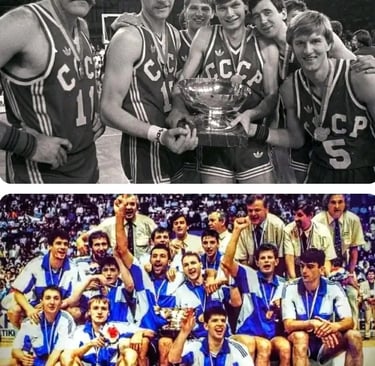
Despite their differences, both countries shared the conviction that basketball was something far greater than a sport. For the Soviets, it was a tool of political supremacy. For the Yugoslavs, it was a national art form and a means of cultural expression. The Soviet Union won with precision, patience, and discipline. Yugoslavia triumphed with inspiration, passion, and improvisation. The first school built a tradition that inspired discipline and collective sacrifice. The second created a style that still influences the way basketball is played across Europe today. Neither the Soviet Union nor Yugoslavia exists on the world map anymore—the former collapsed under the very political system that created it, the latter drowned in the vast sea of blood of an inevitable war.
Their flags no longer wave, their anthems are no longer heard before tip-off. And yet…Every time we see a player make a selfless pass, we remember the Soviet ideal of collectivism—the echo of Soviet philosophy still resounds. And every time someone takes the decisive shot, filled with confidence and imagination, the Yugoslav soul awakens. These two schools will never meet again on the same court. Yet in the hearts of those who love basketball, their contest continues. A contest without a final buzzer—full of passion and the sense that once, the game was something more than mere athletic expression.
The Soviet Union and Yugoslavia will forever play the most beautiful game of all, the one preserved in our memory.
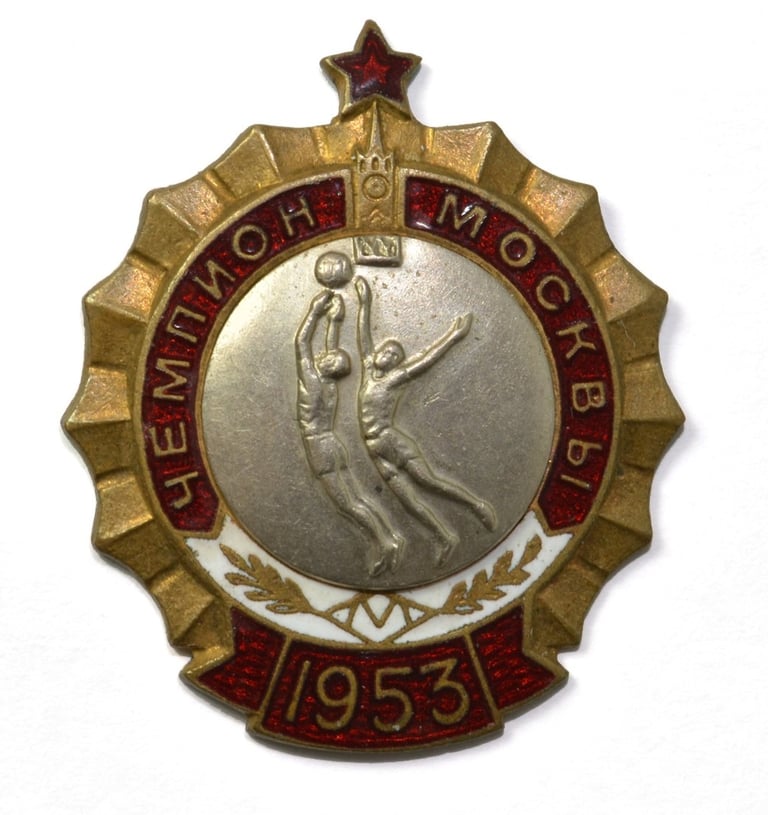
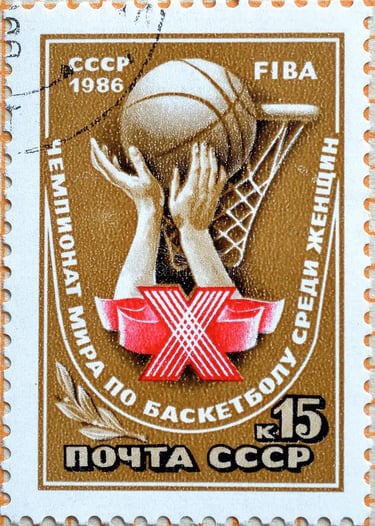
Let us begin with the Soviet Union, where basketball was treated as an extension of socialist collectivism. For the “Bear,” sport was one of the most powerful tools of propaganda. Every victory on the court was a political statement—the superiority of the socialist model over capitalism. Basketball was not merely a sport; it was a stage upon which the strength of discipline, organization, and devotion to the team was displayed. Throughout the USSR, basketball was not just a game but an instrument of ideological projection. The central narrative was clear: the superiority of the socialist system was reflected in the dominance of its teams in international competitions.
One striking statistic says it all. In 14 EuroBasket gold medal triumphs, not once did a Soviet player finish as the tournament’s leading scorer. This was no coincidence. It was a conscious choice. Individual distinction had no place within the framework of socialist ideology, which elevated the collective above the individual. The pass was more important than the shot; defensive commitment more valuable than the spectacular dunk. Excessive individual brilliance was considered “bourgeois” and contrary to socialist principles. The ideal Soviet player was one who became a seamless part of the system.
At the center of this approach stood Alexander Gomelsky. The “Colonel” was not only a top-tier coach but also a fervent advocate of collectivism. He worked obsessively on tactics, managed his team with surgical precision, and ensured that each player knew his role with absolute clarity. For Gomelsky, basketball was a machine; every player was a gear. If one gear began to rotate of its own will, the machine would cease to function harmoniously. His philosophy did not allow for unrestrained expression of talent. Even towering figures such as Sergei Belov and Arvydas Sabonis “submitted” to Gomelsky’s collective approach. He was the undisputed authority of Soviet basketball—a small “dictator” whose decisions were followed with reverence.
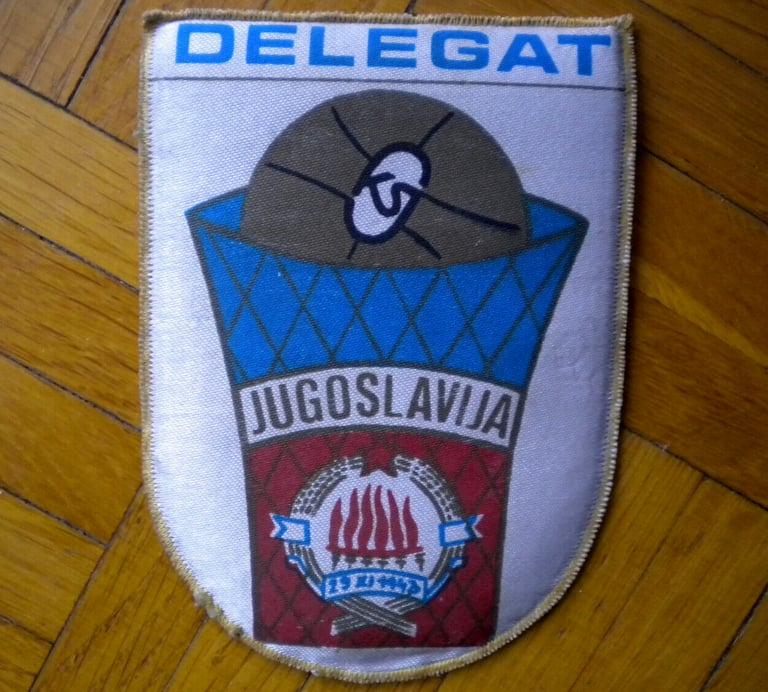
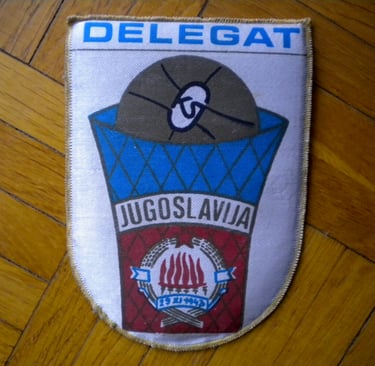
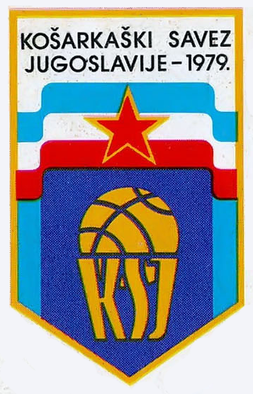
On the other side stood Yugoslavia, which, though communist in theory, possessed a different political DNA. Its system of “self-managed socialism” allowed greater autonomy to its federal republics, and this spirit carried over into sport. Here, basketball was not a machine but a canvas for creativity. If the Soviet Union was a disciplined symphony orchestra, Yugoslavia was a jazz ensemble improvising with passion. The country produced some of the most gifted players in the history of European basketball, but this flourishing was no accident.
At its foundation stood the famous “Holy Quartet”: Aleksandar Nikolić, Radomir Šaper, Borislav Stanković, and Nebojša Popović. These four men did not simply build a national team; they created an entire basketball culture. In Yugoslavia, a player’s talent was sacred, and the coaching system existed to enhance it, not restrain it. Improvisation, imagination, and individual excellence were not merely tolerated—they were encouraged. The result was basketball filled with passion, risk, and unforgettable moments: the sharp intellect of Krešimir Ćosić, the magical simplicity of Mirza Delibašić, the explosiveness of Dražen Petrović, the completeness of Toni Kukoč. In Yugoslavia, players were not confined by the system; rather, the system existed to give them space to breathe. The Yugoslav philosophy saw no contradiction between individual brilliance and collective success. The belief was that when talent flourishes, it elevates the entire team. The result was basketball rich in imagination, greater in risk, and emotionally powerful for the audience.
2025 All rights reserved
