Theodoros Papaloukas
“The Greek Tsar”
RETROPLAYERS
Antreas Tsemperlidis
5/10/202610 min read
The alarm clock was right on time for its appointment. The young boy, who had barely managed to sleep all night — and what a night it had been, full of celebrations — jumped out of bed. The jersey on which he had written the number 4 with a marker was waiting for him. He quickly put it on, grabbed his basketball, and headed to the neighborhood court which, by one of fate’s strange games, would later come to be known as “Ellinorosson.”
It was still very early. No other kids were at the court yet, and little Theodoris began shooting hoops, trying to imitate what Nikos Galis had done the previous night. Greece had just been crowned European champions, and the history of Greek basketball would change forever.
The youngster would follow in the footsteps of his older brother Kostas and join the youth academy of his local club, Ethnikos. And so began the writing of the great chapter of Theodoros Papaloukas in the annals of European basketball. A player whose mind operated at thousands of revolutions per minute on the court, always finding a different solution with the same result every time: an assist and a happy teammate.
The wizard of the pick-and-roll started building his legend in nearby Ambelokipi as a member of Kalafatakis’ team, which had just been relegated to the second division. During that period, his exact position on the court had not yet been defined, and his height (2.00m / 6’7”) allowed him to play all three perimeter positions and even, when necessary, at power forward. The youthful Ambelokipi squad favored fast-paced basketball, and by the 1996–97 season he had established himself as a point guard. At Dafni, the next stop in his career, Papaloukas began to fully showcase his virtues with a more active role. After three years battling through the difficult paths of the second division, the time had come for him to test himself at the highest level.
Panionios would be the team to give him that opportunity, and “Teo” would seize it with both hands. In Nea Smyrni, he apprenticed alongside one of Europe’s most cerebral guards, Jure Zdovc, and his improvement was rapid. Together with Giorgos Diamantopoulos, they formed a spectacular duo; their chemistry was flawless, and Panionios became a joy to watch for every basketball fan. In his final season at the Artakis indoor arena, Theodoris led the league in assists, and Petropoulos, with the approval of technical advisor Giannis Ioannidis, called him up to the national team, naming him the starting point guard for the upcoming EuroBasket in Turkey.
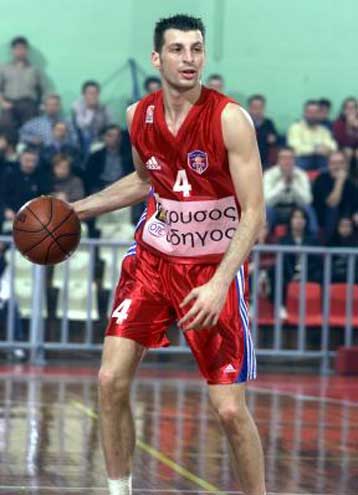
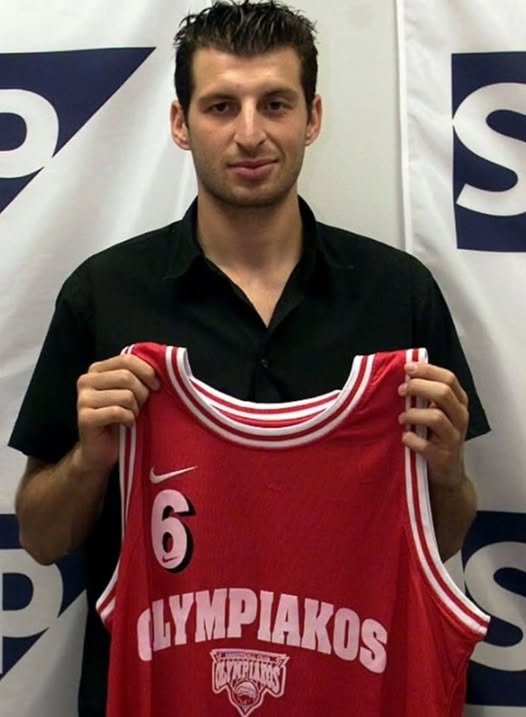
In Antalya, the team experienced tragedy in the knockout game against Dirk Nowitzki’s Germany. After an incredible first half in which Greece led by 16 points, the team collapsed in the second half, with qualification ultimately decided at the free-throw line. Theodoris — notably Greece’s best player that night, orchestrating masterfully — missed five consecutive free throws, and Greece lost 80–75. Of course, he was not solely responsible for the defeat, but back in Greece the journalists crucified him, with some even demanding that he never be called up again. Papaloukas shut out the noise and focused on the next challenge: Olympiacos was waiting to hand him the keys to the team. His transfer became a soap opera involving himself, Olympiacos, and Panathinaikos, who appeared determined to sign him thanks to a better financial offer to Panionios. But Theodoris, who had declared from the start his intention to wear the red-and-white jersey, applied pressure in his own way, and Panionios — fearing they would lose him for free the following summer — finally approved his move to Olympiacos.
The 2001–02 season was a strange one for the Piraeus club. A coaching change (Subotić replacing Zourous) and a shocking defeat to Olimpija Ljubljana buried their dreams of reaching the Final Four. Still, they made it to the Greek League finals, only to lose three straight games as AEK claimed the title. Their consolation prize was winning the Greek Cup after defeating Panathinaikos in the semifinal. Papaloukas had a solid season overall, showing leadership qualities and proving he belonged at the highest level. However, changes in the financial realities of the clubs cracked the relationship between him and Olympiacos. While everyone expected at least the same contract offer as before, the Kokkalis administration unpleasantly surprised “Teo” by proposing a salary reduction. Notably, this offer came in mid-August, when most teams had already finalized their rosters and entered preseason preparation.
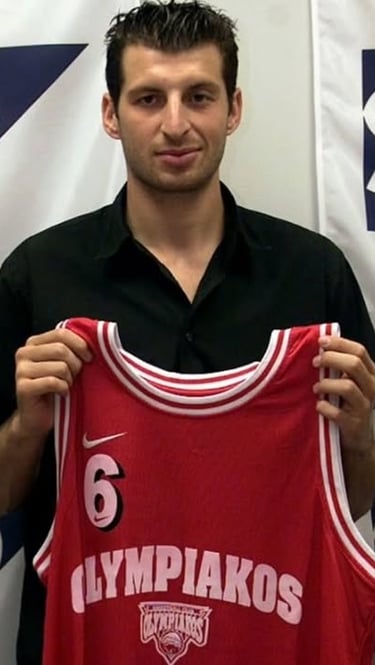
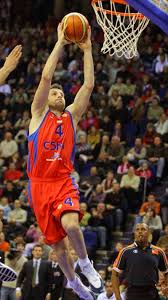
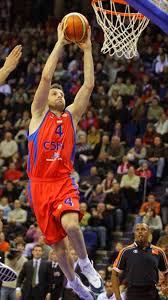
Risking unemployment, Papaloukas refused and entered the market as a free agent. Then came the phone call from Dušan Ivković — an oasis in the desert of uncertainty. In Belgrade, where CSKA Moscow was holding preseason training, he endured “Duda’s” grueling practices, overcame doubts about his condition, and earned a place on the roster of the Russian champions. But because this was Greece, there were still detractors claiming that CSKA had only signed him to keep company with fellow Greek Nikos Hatzivrettas. Clearly, those who said or wrote such things had only a superficial understanding of basketball if they believed a coach like Ivković would ever do “favors” for a talented Greek point guard. Ivković saw in Papaloukas what the entire basketball world would come to admire over the following years. And so “Teo” became a resident of Russia, though adapting to life in Moscow was anything but easy. In a foreign frozen country, accompanied only by his beloved dog “Pirate,” basketball became his escape, and hard work began to bear fruit.
His first season in Russia was mostly introductory. He won the domestic title and played in the first Final Four of his career, where CSKA finished fourth. He also missed out on medals with the national team at EuroBasket 2003 in Sweden. A mixed squad of veterans and young players traveled to Stockholm with ambitions, but the nightmare of knockout games returned in the quarterfinal against Italy. He would have to wait two more years for glory with Greece. Back in Russia, preparations began for the 2003–04 season. By now he had firmly established himself as CSKA’s sixth man and had fully adapted to the team’s philosophy. In the game that secured qualification for the Tel Aviv Final Four, his name became a chant on the lips of CSKA’s fans. It was the beginning of a love affair between Papaloukas and the “Army Men.”
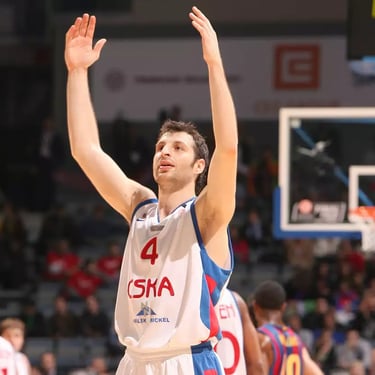
On March 31, 2004, he stole the ball on Baskonia’s inbound pass and dunked to give his team the victory — the day Theodoris became “The Tsar.”
But CSKA’s time had not yet arrived. Another semifinal defeat, another disappointment. Winning the Russian championship had become routine for the Muscovites; it wasn’t the EuroLeague, but it was still a title. The summer brought mixed emotions for “Teo.” Pride and joy from participating in the Athens Olympics, sadness because Greece lost a game they should have won against Argentina, missing a golden opportunity to reach the semifinals. It was Papaloukas’ best performance of the tournament, but his effort went unrewarded. Now 27 years old, he desperately wanted a major trophy. The 2004–05 EuroLeague seemed the perfect destination. The Final Four would take place in CSKA’s own home arena, and the team entered the marathon aiming to finish first. All season long they looked unstoppable, with “Teo” being one of the key pieces. Sporting a 21–1 record, they stepped onto the floor of the Olimpisky Arena as overwhelming favorites against Tau Cerámica in the semifinal. But once again they failed to carry the burden. A third straight Final Four failure became reality for the Russians, and Ivković departed, making way for Ettore Messina.
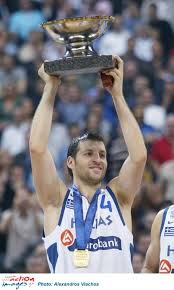
In Theodoris, the Italian coach saw the maestro capable of executing everything he drew up on his clipboard. And if he had any doubts, Papaloukas erased them entirely with his performances at EuroBasket 2005 in Belgrade. Panagiotis Giannakis’ rejuvenated Greek national team became European champions, with Theodoris serving as the floor general. He was outstanding in the quarterfinal against his Russian friends, inspired the comeback against France that ended with the legendary “Put it in, my boy!” moment, and in the final against Germany he left his signature all over the game with 22 points and 6 assists. Messina rubbed his hands with satisfaction, feeling fortunate that CSKA possessed one of the best European point guards of the era. What he did not know was that by the end of the 2005–06 season, Papaloukas would have conquered virtually everything possible at both the team and individual levels. The once unattainable dream — the EuroLeague title — became reality with “The Tsar” leading the charge and earning Final Four MVP honors. He was also named MVP of the Russian league and then traveled to Japan with Greece for the 2006 FIBA World Championship.
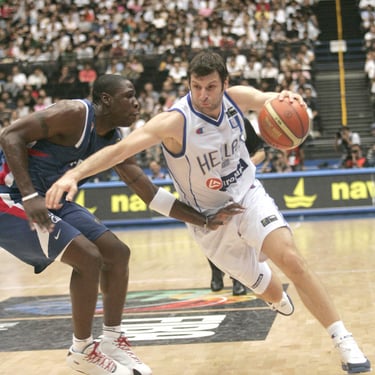
And on September 1, 2006, in the “Epic of Saitama,” he confirmed that he belonged among the elite. Witnessing it all was a stunned Mike Krzyzewski, who watched “Teo” run the simplest basketball play imaginable all night long. Papaloukas dished out 12 assists, each one a dagger into the Americans’ defense. At the press conference afterward, Krzyzewski praised “number 4 who killed us. He’s a brilliant player.” He was absolutely right. Considering the magnitude of the opponent, “The Tsar” delivered the game of his life that night. In the final, an emotionally drained and physically exhausted Greek team lost convincingly to Spain. Still, the achievement of Giannakis’ men was enormous, and only applause awaited them back home.
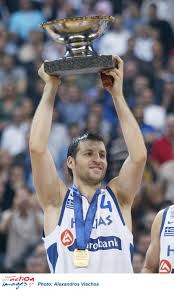
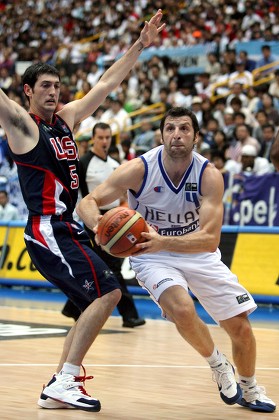
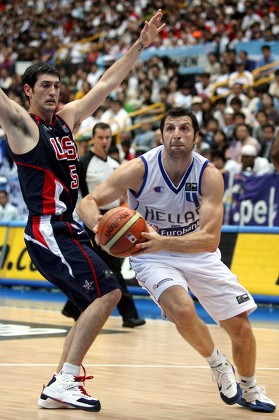
Back at his basketball home, CSKA awaited the best European player of 2006 to defend its EuroLeague crown. Always dependable in the biggest moments, “Teo” played perhaps the finest basketball of his remarkable career during the 2006–07 season. He carried CSKA to the Final Four at OAKA, fully justifying his selection as regular-season MVP. In the final, he blocked out the insults of 15,000 Panathinaikos fans mocking him because of his Olympiacos past and, under the gaze of “The Gangster” (Giannakopoulos), tried almost single-handedly to defeat the Greens. Nevertheless, his 23 points and 8 assists were not enough to stop Panathinaikos from claiming its fourth European star.
He delivered another unforgettable one-man show at EuroBasket 2007 in Spain. In the quarterfinal against Slovenia, he scored 12 points in just two and a half minutes with his trademark drives, a wild off-balance three-pointer, and finally the game-winning basket over Rasho Nesterović. Greece, trailing 61–49 with four minutes remaining, completed an incredible comeback to win 63–62. “The Tsar” and the rest of the team fought valiantly against Spain in the semifinal, but while Greece played basketball, the Spaniards won Oscars for their theatrics. Greece eventually finished fourth after losing to Lithuania in the bronze-medal game.Papaloukas returned to Moscow for the final year of his contract with CSKA. The cycle would close with yet another EuroLeague title, and “The Tsar” would temporarily leave his throne.
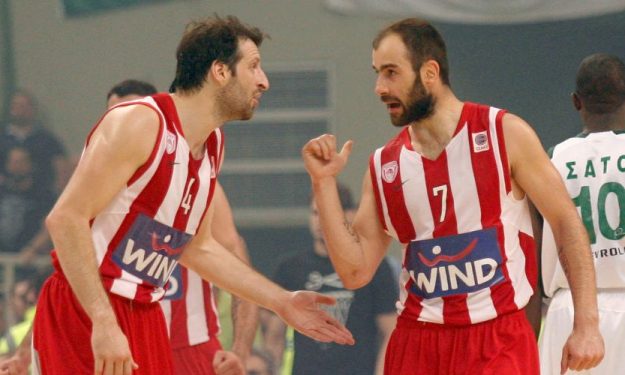
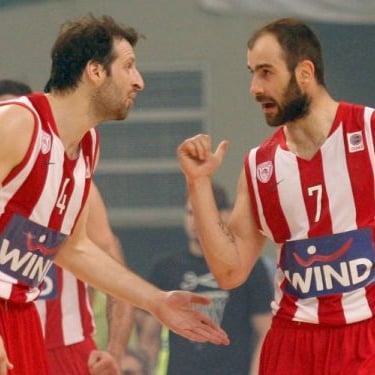
Now a free agent, the best point guard in Europe attracted the attention of every major club. Papaloukas listened to his heart and returned to Piraeus to help Olympiacos dethrone its eternal rival and dominate Europe. After the Beijing Olympics, he joined the team ready to achieve his goals. Unfortunately, the drought of titles continued during “Teo’s” three-year stint. Two domestic cups were an almost insignificant return for Olympiacos’ ambitions. The ghosts of the past resurfaced in the Hitchcock-like fourth final at OAKA in 2011. Papaloukas missed two free throws that sent the game into overtime and ultimately handed victory to Panathinaikos — a game he himself later admitted he would love to replay. He also reached another Final Four with Olympiacos, the eighth of his career, but this time again failed to deliver the title. The championship drought brought frustration, then anxiety and tension. Though hardly responsible to the extent many accused him of, and with age used as an excuse, he found himself cast out of the Olympiacos family in the summer of 2011.
At 34, Papaloukas may have expected it. It had happened before. In 2009, a misunderstanding involving Jonas Kazlauskas and a phone call that never came regarding the national team for EuroBasket Poland effectively ended his international career quietly and unfairly. Without ever choosing it himself, he hung up the blue-and-white number 4 jersey.
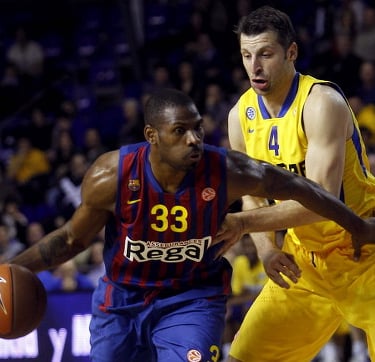
Once again, playing abroad became the only solution. After working under Ivković and Messina, he would now collaborate with another great coach at another historic club. David Blatt invited him to Maccabi Tel Aviv, and his stint in Israel brought him not only another championship but also universal recognition from fans who live and breathe basketball. Maccabi supporters understood that one of the greatest point guards in European history had worn their jersey. “The Tsar” would close the curtain on his immense career with the club he loved most and where he was loved the most in return. CSKA offered him his final contract, and Papaloukas gave them a few more quality minutes. But time spares no one. His legs could no longer keep up with his endlessly creative basketball mind, and in 2013 Theodoris Papaloukas finally and irrevocably retired — appropriately, as a champion.
How will I remember “Teo”?
First and foremost, as the man who made basketball look simple and easy. That was because of his extraordinarily high basketball IQ. He was a computer on the court, operating at thousands of revolutions per minute. He read every play before anyone else did, and even if the ball had to pass through the eye of a needle, Papaloukas would find a way. I also admired Theodoris for another reason: nothing was ever handed to him. Everything he achieved was the result of hard work, healthy pride, and belief in himself. Those qualities transformed him from a good player into a legend, as EuroLeague itself later called him.
The way he changed games coming off the bench was something unprecedented.
In Greece, we never appreciated his talent as much as we should have, and he had to leave home in order to evolve. Thankfully for us, we still got to enjoy him with the national team during its greatest moments. Once, people wrote that Antoine Rigaudeau was the point guard of the 2000s. How wrong they were…
The two-meter-tall Greek taught the basketball world how the game of the new millennium should be played: with intelligence. That’s how he outsmarted the Americans. That’s how he turned around the quarterfinal against Russia. That’s how he posted up the French again and again. That’s how he terrorized the Slovenians.
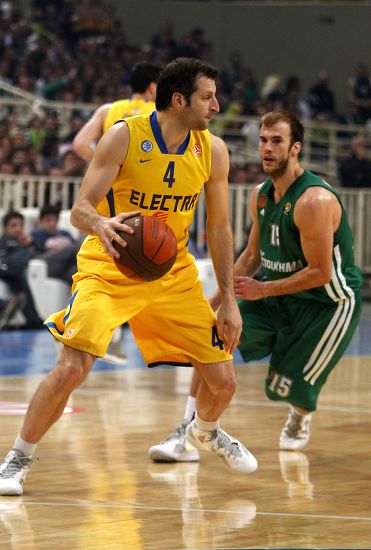
“The Tsar” is deeply missed in Greek basketball.
If he had been present in some of the national team’s later tournaments, you can be certain those critical games would have ended differently. The moment the coach would have called “Teo” off the bench, everything would have changed. And maybe then we would have appreciated him more and truly understood how great a player Theodoros Papaloukas was.
One of the greatest figures in the pantheon of European basketball.